Moving into a new apartment is an exciting chapter in your life, but the moving process can
be daunting. As professional movers, we’ve seen it all and know that a smooth move is
possible with a little preparation. Here’s our expert advice, along with a handy checklist, to
make your first apartment move stress-free.
Plan Ahead
One of the most crucial steps in any big project is preparation. Start by creating a moving
timeline and working backward from your moving date. Here’s a guide to what should
happen during each phase:
- 8 Weeks Out: Begin decluttering. Go room by room and decide what will move with
you and what needs to be donated or discarded. This reduces the amount you have
to pack and move later. Less stuff equals less cost when it comes to paying for
moving services. - 6 Weeks Out: Book your moving company or truck. If you’re hiring professionals,
now’s the time to secure your moving date. Movers get booked quickly, especially at
the end of the month or during the summer. - 4 Weeks Out: Start packing non-essentials. Ask yourself “What can I live without for
the next four weeks?” Seasonal clothing, books, and decor can go into boxes first. If
you’re packing yourself, make sure to label boxes based on the room you want them
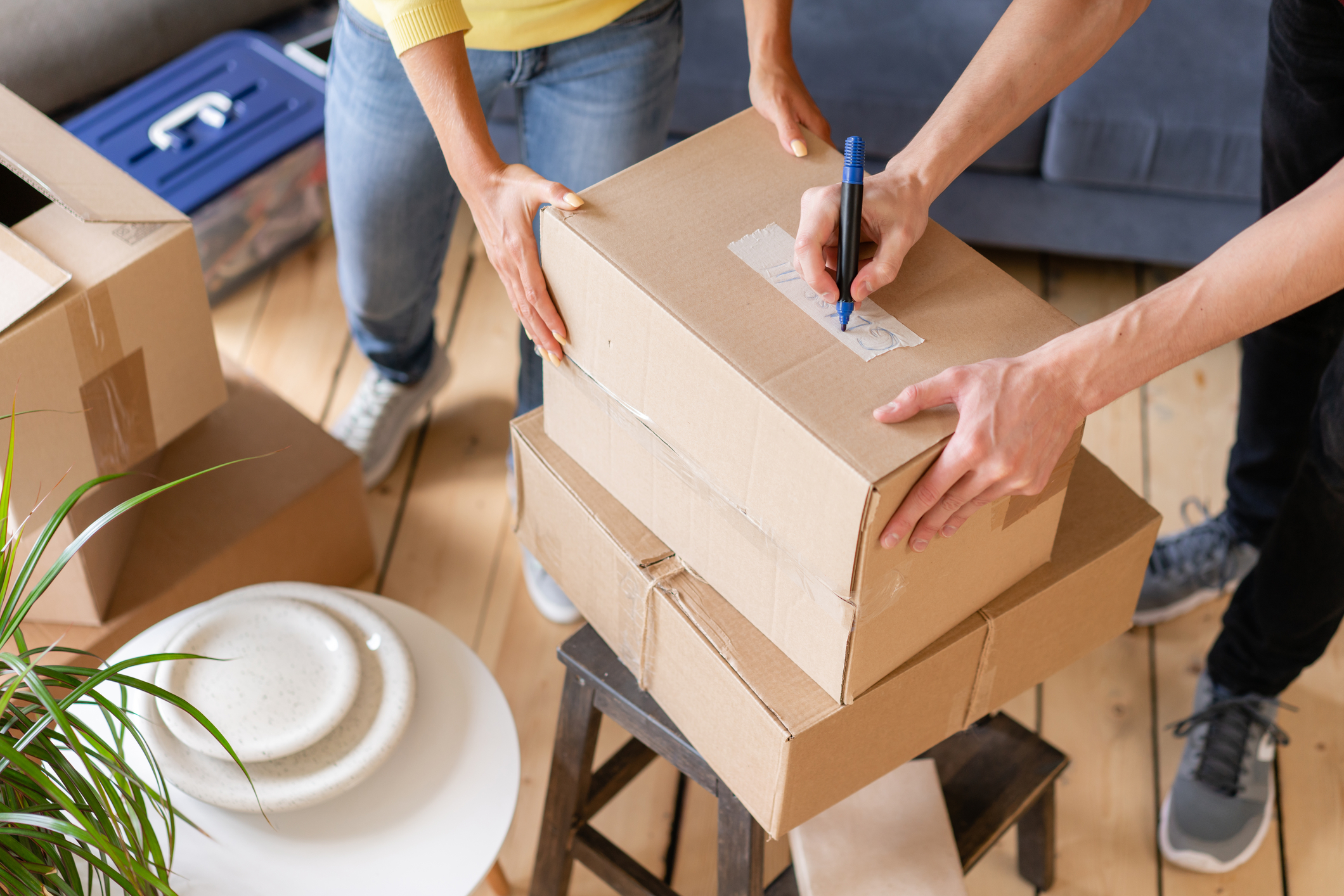
delivered to and the contents of the box. Pro Tip: Write what’s in the box on the side
so you can read it when the boxes are stacked up in your new home. - 2 Weeks Out: Confirm logistics. Coordinate with your building management about
moving day details like parking, elevator access, and the time frame you’ll need.
This is especially important if you’re moving into a building with a shared elevator or
limited loading zones. Check to see if your mover needs to provide proof of
insurance to the building manager. - Moving Day: Review the checklist (below) and ensure everything is organized and
ready to go.
Check Your Apartment’s Moving Requirements
Many apartment buildings have specific rules for moving, such as designated hours or
parking restrictions. It’s a good idea to check these in advance so you can avoid
unnecessary delays.
- Reserve Elevators: If you’re in a high-rise, many buildings require elevator
reservations. Some will even pad the walls to protect them during the move. - Parking Permits: Check if you need to reserve parking spaces for the moving truck.
Some cities require special permits for moving trucks parked on the street. In
Chicago, a folding chair, even if strategically placed, might not be enough to reserve
the parking space.
Use a Moving Checklist
A detailed timeline helps you avoid last-minute scrambling and ensures that nothing
important is overlooked during your apartment move. To make the process easier for you,
we’ve created a printable moving checklist to assist you in preparing for your move. Click
here to download our checklist. Here’s a simplified version of our checklist:
- Utilities: Arrange for the transfer or setup of electricity, water, gas, and internet in your new apartment.
- Packing: Pack a box of essentials including toiletries, clothes for a few days if your move is over a weekend or if you are moving out-of-state, chargers, jewelry and important documents. Put this box in your car or in an area marked NOT MOVING, so the box does not end up on the truck during the move. Clearly label boxes with their contents and room destination.
- Moving Day Essentials: Have your lease, ID, and any building entry codes or keys ready. Complete a final walk-through to double-check closets, drawers, and storage spaces to ensure nothing is left behind.
Packing Tips from Movers
Packing can be one of the most time-consuming parts of moving. Here are some tips we
recommend:
- Don’t Overload Boxes: Keep boxes light enough to lift easily. Overloading leads to
damaged boxes and more physical strain. - Don’t Under Pack Boxes: Your packed boxes will need to be stacked during the
move and if there is open space at the top of the box, the carton will crush
potentially causing damage to the contents. Fill every box to the top with towels,
clothes, soft goods, or crumpled packing paper. - Use Proper Packing Materials: Use multiple layers of packing paper or bubble wrap
for delicate items, and pack heavier items like books or canned goods in smaller
boxes to avoid breakage. - Label Everything: Label not only by room but also with details about the contents.
This way, you’ll know which boxes to prioritize when unpacking. Write the room on
the top of the box and write the contents on the side.
Don’t Forget About Security Deposits
To get your full security deposit back, you’ll need to leave your current apartment in good
condition. Consider these steps:
- Fix Small Damages: Patch up holes from hanging pictures and repair any other
minor damage. - Deep Clean: Once everything is packed, take time to clean thoroughly. This
includes vacuuming, wiping down surfaces, and ensuring the bathroom and kitchen
are spotless.
Related Articles




What's Trending


Recommended for you